
How to unwind after work when your mind is still busy
A realistic 15-minute transition for closing the working day and making the evening feel like your own again.
On this page
You close the laptop, but the working day follows you into the kitchen. One message is still on your mind. Tomorrow’s list is already forming. Before you notice, your evening has become an extension of the afternoon.
I know that feeling. What helped me was creating a small, repeatable moment between work and the rest of my evening. Nothing elaborate, just a clear signal that said: work stops here.
Why switching off can feel so difficult
If you are still replaying conversations while making dinner, it does not mean you are bad at relaxing. Your body may have left the desk while your attention is still finishing the day. Researchers have a name for the distance we need here: psychological detachment from work. In ordinary language, it simply means having time in which work is no longer asking something of you.
This is especially relevant when home is also the office. There may be no commute, closed shop or change of building to create a boundary for you. Dutch figures also show why the problem feels so familiar: CBS reported that 32% of employees experienced frequent or constant work pressure in 2024, with women reporting it more often than men.
If you work from home, physically reset the space where possible. Put the laptop and charger away, clear one part of the desk or leave the room for a few minutes. When you cannot change locations, changing the light, your clothes or the music can create the missing boundary.
You do not need to turn that knowledge into another thing to master. A small, deliberate boundary is often a kinder place to begin than trying to build the perfect evening.
How to unwind after work in 15 minutes
If you want to unwind after work without adding another demanding routine, use this sequence as a starting point. Shorten it on difficult days. Repetition matters more than completing every step.
- Close the open loops
Write down tomorrow's first task and anything you are afraid of forgetting. Then close every work tab and put the laptop out of sight.
- Change your physical state
Stand up, change clothes, wash your hands and face, stretch or walk around the block. Give your body a clear change of scene.
- Reduce incoming demands
Put your phone on charge away from the sofa for ten minutes and silence work notifications for the evening. If your role requires availability, choose a specific time to check instead of remaining continuously on call.
- Change the atmosphere
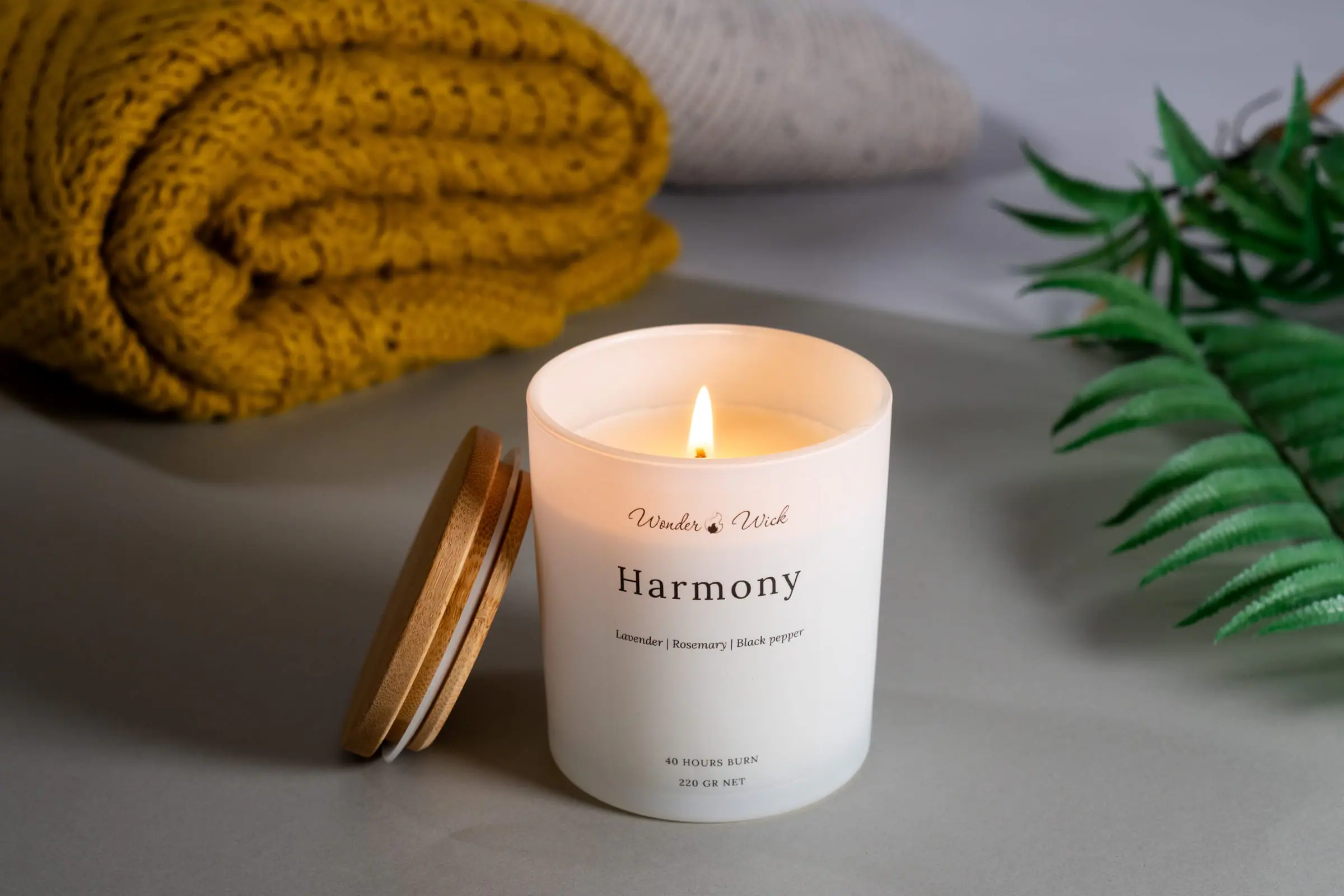
Switch off the strongest light. Choose a lamp, light a candle safely and start music that belongs to your personal time.
- Do one contained activity
Make tea, shower, read ten pages, prepare dinner slowly or sit through one playlist. Pick something with a natural ending.
If you only manage the first and last steps, the routine still counts.
Your mind may return to work even after you finish the routine. When that happens, try not to reopen the laptop to quickly check something. Add the thought to tomorrow’s note, remind yourself that it has somewhere to go, and return to the activity you chose. The goal is not to stop every work thought. It is to stop following each one.
Choose cues that belong to the evening
A transition works best when the cues are noticeably different from work. If you listen to the same playlist at your desk, it may not feel like an ending. If every overhead light stays on, the room still feels active.
Music is useful here because it is easy to repeat and deeply personal. Research suggests it can support stress reduction, although the results are not identical for everyone and choice, tempo and context all seem to matter. That feels fairly intuitive: the song that softens one person’s evening may irritate someone else. Choose music you genuinely like. A playlist can help shape the moment without needing to become medicine.
Scent can work in the same personal way. Research into aroma and mood is limited and does not justify promises that a particular oil will make everyone relax. Use scent because you enjoy it and because repeating it can make your evening ritual recognisable.
What to do when you are too tired for a routine
Make the minimum version almost effortless:
- Write tomorrow’s first task on paper.
- Put the laptop away.
- Turn on one lamp instead of the main light.
- Play one familiar track.
- Sit down without your phone until the track ends.
That is enough. Rest does not need to become another performance target.
On days like these, the simplest way to unwind after work is usually the one you will actually do. For a broader structure that includes personal time and preparing for tomorrow, build a realistic evening routine around the time and energy you have.
If work pressure or distress is persistent and affects daily life, a home ritual is not a replacement for support. In the Netherlands, Thuisarts offers reliable health information and explains when to contact your huisarts.
Sources
- CBS, De arbeidsmarkt in cijfers 2024
- Sonnentag, Cheng and Parker, Recovery from Work: Advancing the Field Toward the Future
- de Witte et al., systematic review and meta-analyses of music interventions
- Adiasto et al., systematic review of music listening and stress recovery
- Thuisarts, reliable Dutch health information
Frequently asked questions
How long does it take to unwind after work?
There is no fixed time. Start with a repeatable 10 to 15-minute transition. The aim is to mark the end of work, not to force yourself to feel different immediately.
What can I do instead of scrolling after work?
Choose something with a clear beginning and end, such as a short walk, shower, cup of tea, ten pages of a book or one music playlist. Put your phone in another room while you do it.
Can scent help me switch out of work mode?
A familiar scent can become a personal cue that the working day is over. Scent preferences are individual, so choose one you enjoy and treat it as atmosphere rather than a health intervention.